


The Heat Is Back on the Market


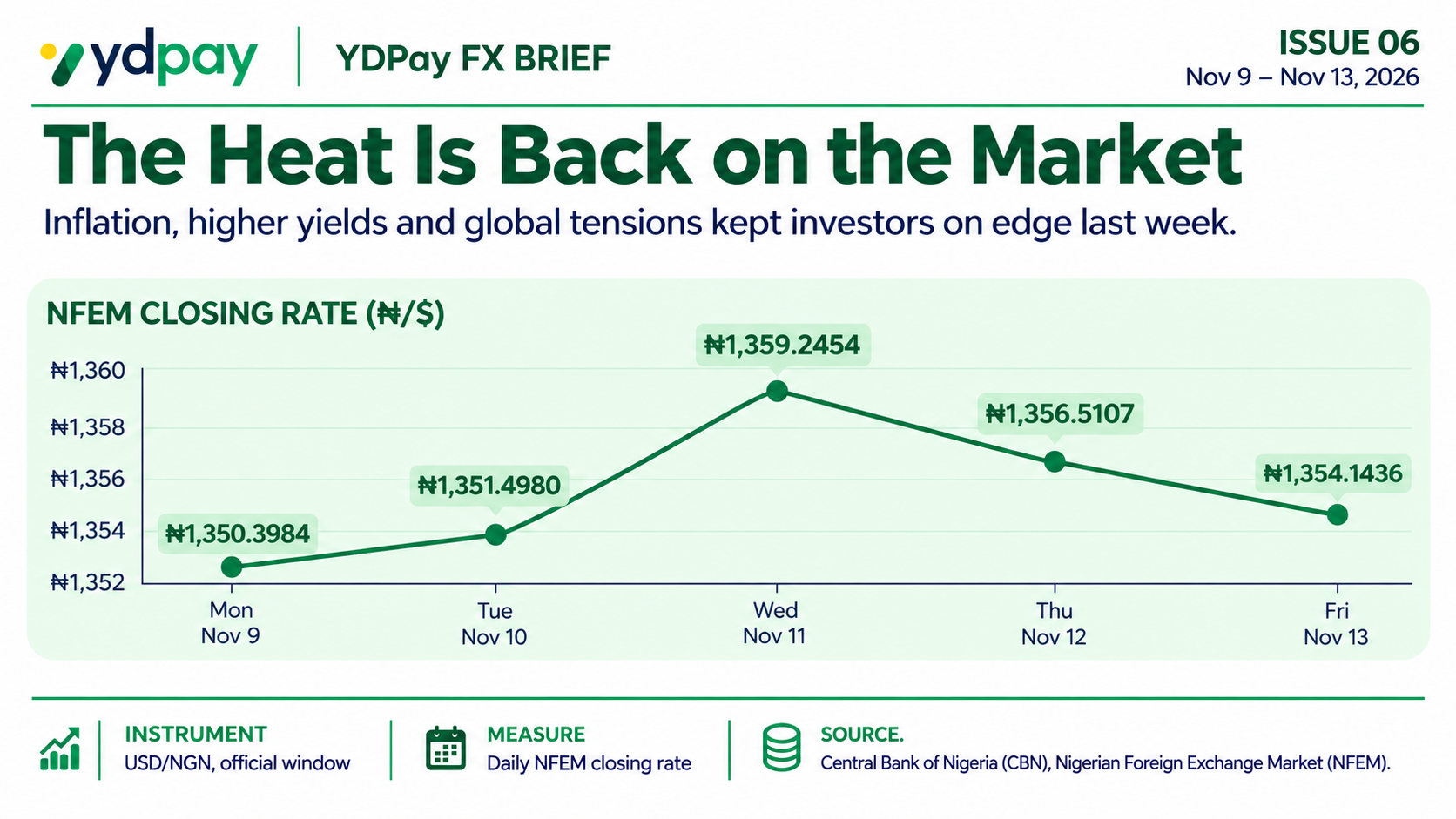
Last week, political drama took centre stage, and the naira barely blinked. This week, however, the dollar had other plans.
Rising inflation concerns, higher bond yields, and geopolitical tensions gave investors plenty to think about, pushing the dollar towards its strongest weekly performance in two months.
So, what changed, and why should Nigerian businesses pay attention?
Let's get into it.
1. Inflation Keeps Investors on Edge
The week started with fresh US inflation figures. October's Consumer Price Index (CPI) rose by 0.4%, following a 0.6% increase in September.
Food, energy and shelter costs all contributed to the increase.
For investors, persistent inflation raises concerns that the Federal Reserve may keep interest rates higher for longer or consider another increase.
This matters because higher US interest rates can make dollar-denominated investments more attractive, increasing demand for the currency.
2. The US Fed and Bond Yields Add to the Pressure
Inflation wasn't the only thing keeping investors alert.
Comments from Federal Reserve officials reinforced expectations of tighter monetary policy, with markets increasingly pricing in a possible interest-rate increase in December.
At the same time, US Treasury yields climbed. The two-year Treasury yield rose approximately 34 basis points to 4.87%, marking its biggest weekly increase since April 2025.
Higher yields can attract international investors seeking better returns, further supporting demand for the dollar.
3. Oil Prices and Geopolitical Tensions Add Another Twist
Just when investors had enough to consider, geopolitical tensions added another layer of uncertainty.
Reports of attacks on Saudi energy infrastructure and disruptions around the Strait of Hormuz pushed oil prices higher on November 12.
Brent crude rose by $3.06 to settle at $95.82 per barrel, while US WTI increased to $88.74.
Higher oil prices can add to global inflation pressures, making the Federal Reserve's decisions even more complicated.
So, How Did the Week End?
By Friday, November 13, the US Dollar Index had climbed to approximately 103.37, putting it on track for its strongest weekly gain in two months.
Other major currencies also felt the pressure, with the euro falling to around $1.103 and the Japanese yen trading near 159.70 per dollar.
The week's movements showed just how much inflation expectations and interest-rate decisions can influence global currency markets.
What Does This Mean for Nigerian Businesses?
A stronger dollar can increase the cost of imports, overseas supplier payments and other international obligations.
For a Nigerian business paying overseas suppliers, even small exchange-rate changes can affect how much it spends to settle an invoice.
However, the naira's performance isn't determined by global dollar movements alone. Local FX supply, demand, liquidity and Central Bank policies also play important roles.
That's why businesses need to keep an eye on both global developments and conditions in the domestic market.
What to Watch Next
Investors will continue monitoring Federal Reserve signals, upcoming US economic data, Treasury yields and geopolitical developments for clues about the dollar's next move.
For businesses handling international payments, staying informed can help with better transaction planning and cost management.
The Bigger Picture
Last week, the market was weighing political developments. This week, inflation, interest rates and geopolitical tensions took over.
One thing remains clear: global developments can have local consequences, especially for businesses operating across borders.
That's it for this week's Market Pulse. See you next week!
Disclaimer: This content is for informational and educational purposes only and should not be considered financial advice.


Related Articles



Stay in the loop with market trends.


