


How Did the US Election Week Affect the Naira?


Some weeks follow a familiar pattern. Others start quietly, throw in a few surprises, and leave you wondering what just happened.
Last week was the second kind.
The US midterms shook up politics, oil prices slid, and then Friday’s jobs report flipped the mood completely. So, what really happened, and what does it mean if you pay for things in dollars?
Let's get into it.
The Global Picture: A Dollar That Couldn't Decide
The week began with investors assessing the outcome of the US midterm elections.
The Democrats’ gains in both chambers of Congress introduced questions about the direction of US economic policy, government spending and regulation. The dollar initially came under pressure as investors reassessed the political outlook.
Oil prices also experienced significant declines amid changing expectations around Middle Eastern supply disruptions.
However, the biggest market-moving development came on Friday, November 6, when the US released its October employment report.
The report showed that the US economy added 165,000 jobs, significantly above the 65,000 economists had expected. The unemployment rate also declined to 4.1%.
The stronger employment figures supported the dollar, pushing the US Dollar Index up by 0.77% on Friday to 102.26. The development also increased market expectations of a possible Federal Reserve interest-rate increase in December.
And the Naira?
While the world watched Washington, the naira had its own quiet week.
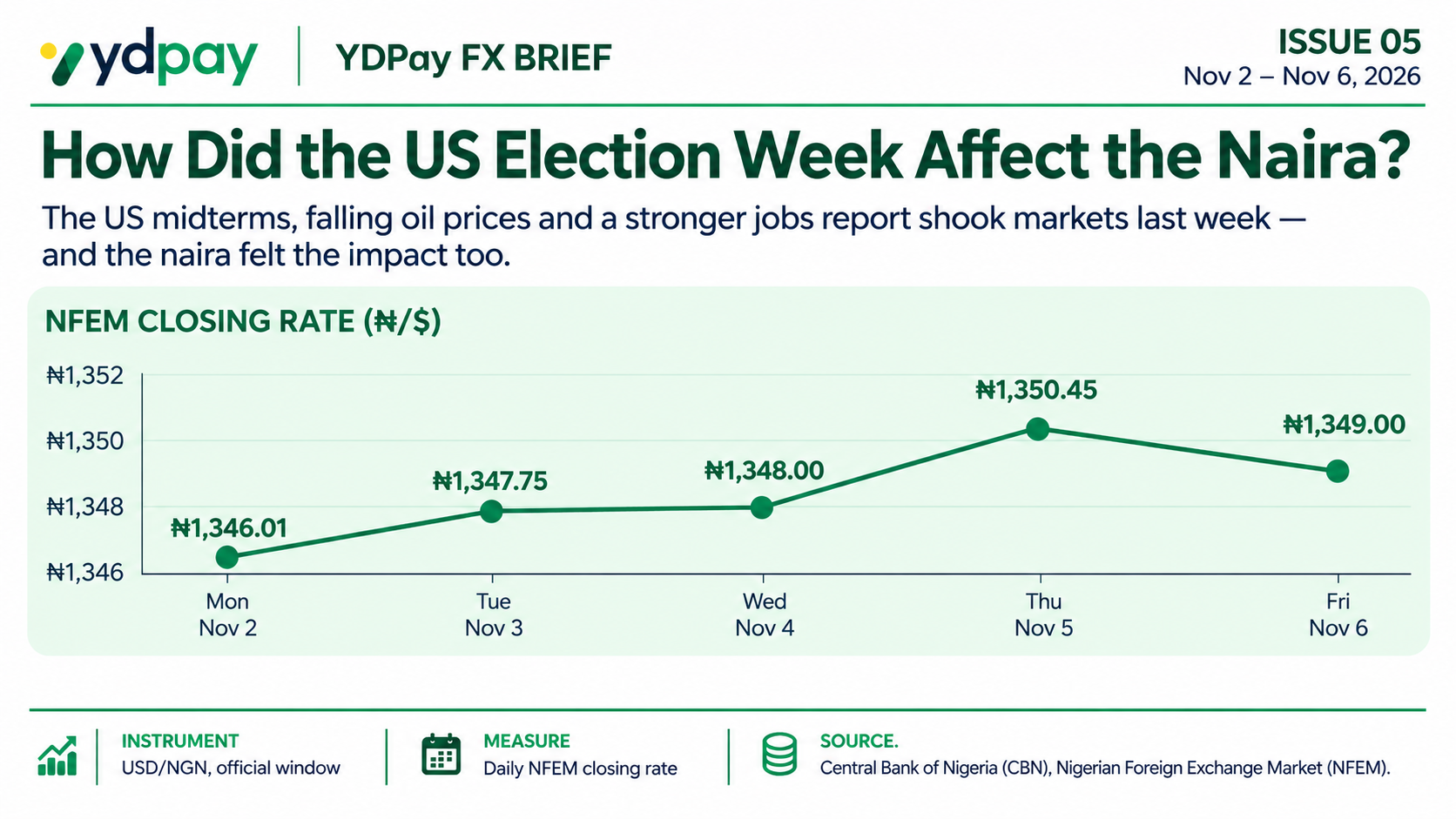
According to reported NFEM closing figures, the naira opened the week at approximately ₦1,346.01 per dollar on Monday, November 2.
It weakened gradually over the following trading sessions, reaching ₦1,350.45 on Thursday, November 5, before recovering slightly to close at approximately ₦1,349 on Friday.
This represented a depreciation of approximately 0.22% between Monday and Friday.
Date
NFEM RATE (₦/$)
Monday, November 2
1,346.01
Tuesday, November 3
1,347.75
Wednesday, November 4
1,348.00
Thursday, November 5
1,350.45
Friday, November 6
1,349.00
The modest movement highlights how domestic FX supply, demand and liquidity continue to influence the local market alongside global developments.
Why Should You Care?
For businesses that make international payments, purchase goods from overseas suppliers or maintain dollar-denominated obligations, even relatively small exchange-rate movements can affect transaction costs.
Consider a business with a $10,000 payment to make.
At ₦1,346.01 per dollar, the payment would cost approximately ₦13,460,100.
At ₦1,349 per dollar, the same payment would cost approximately ₦13,490,000.
That’s an additional ₦29,900 for the same payment.
This is why keeping an eye on exchange-rate movements matters, especially for businesses managing regular international transactions.
What Comes Next?
As we enter another trading week, attention remains on US inflation figures, Federal Reserve policy expectations and developments in global energy markets.
These indicators will provide further insight into the strength of the US economy and the possible direction of the dollar.
The Bigger Picture
Last week showed how quickly market expectations can change. Stronger US employment figures supported the dollar, while the naira recorded a modest depreciation.
For businesses handling international payments, staying informed can make a difference when planning transactions and managing costs.
That's it for this week's Market Pulse. See you next week!
Disclaimer: This content is for informational and educational purposes only and should not be considered financial advice.


Related Articles



Stay in the loop with market trends.


