


The Dollar Went Quiet Last Week. Here's Why That's Actually Interesting


I know you've been checking the exchange rate more often than you check your bank balance. 😄
If you were braced for drama between September 21 and 25, I have good news and slightly boring news. The good news is that the naira stayed calm. The boring news is that there's not much of a rollercoaster to describe, but the reasons behind the calm are worth knowing.
What actually happened?
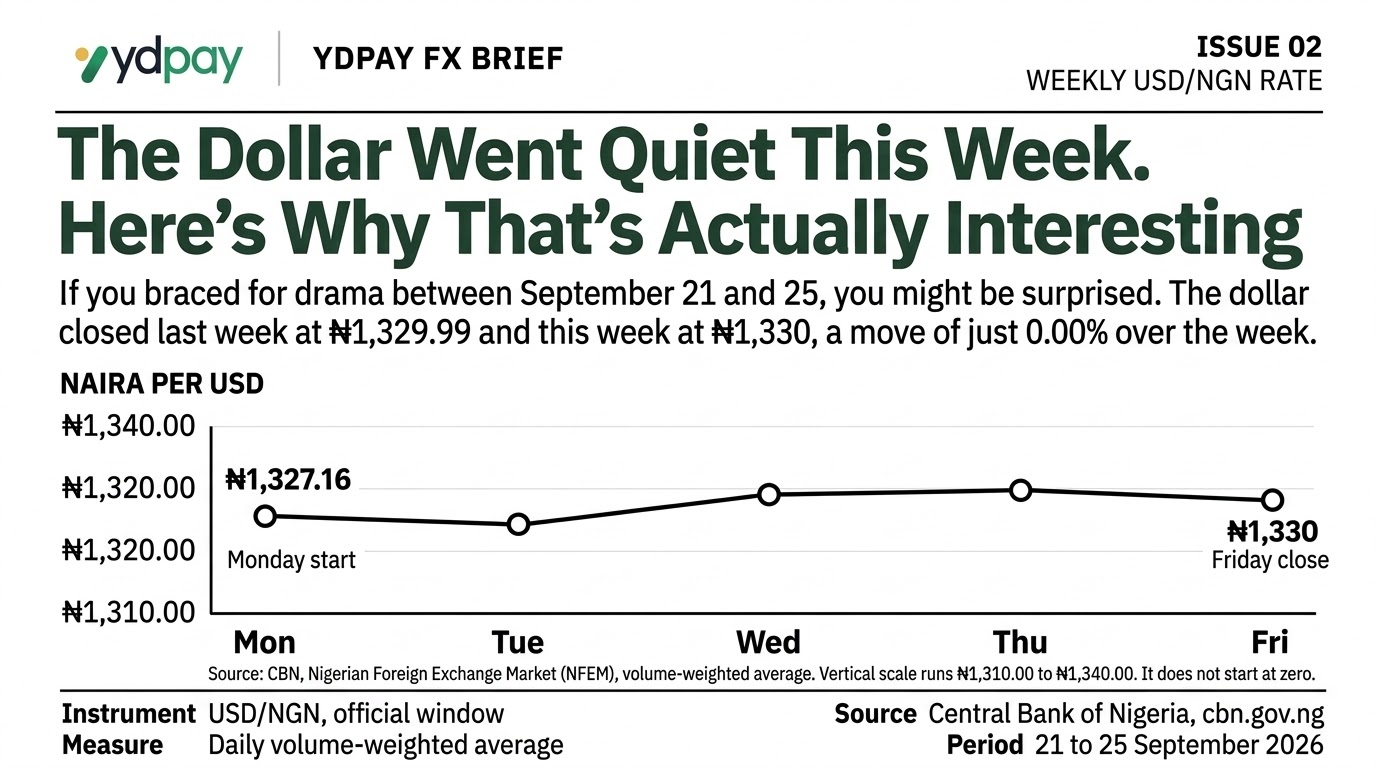
Last Friday the dollar closed at ₦1,329.99. This Friday it closed at ₦1,330. That's a difference of one kobo. So, if you bought $100 at the start of the week and again at the end, the difference was basically just ₦1.
There were small wobbles in between. Monday was a little jumpy, with the dollar swinging between ₦1,327 and ₦1,336 in a single day. After that it settled down, and the official rate moved between ₦1,325 and ₦1,336 for the whole week. That's a tight range for a currency that has given Nigerians plenty of sleepless nights.
The plot twist
Here's what could have gone wrong. On Tuesday, the CBN cut its benchmark interest rate by 350 basis points, from 26.5% to 23%, which caught a lot of people off guard.
Why should you care? When interest rates fall, holding naira investments pays less, and investors chasing the best returns may look elsewhere. Money leaving naira assets means more demand for dollars, which normally pushes the dollar up.
Economist Bismarck Rewane called it a "jumbo cut" and warned the naira could come under pressure. He also said the immediate reaction in the market was muted, with the parallel market hovering around ₦1,387.
If the naira didn’t panic, why didn't the dollar go crazy?
Based on what the reports say, a few things may have been working in the naira's favour.
1. The CBN is sitting on a big pile of dollars. Nigeria's external reserves crossed $55 billion, the highest in more than 18 years. Think of it like having a well-stocked pantry. When you know you won't run out, you don't panic-buy, and neither does the market.
2. The market was busy midweek. On Wednesday the naira gained ₦3 against the dollar, and interbank turnover jumped 181.5% to $279.2 million from $99.2 million the day before. More dollars changing hands smoothly meant less scramble.
3. Oil stayed pricey. Nigeria earns most of its dollars from crude. Brent settled at $104.32 a barrel on Friday, slightly above the previous week's close, thanks to ongoing Middle East supply worries. I haven't seen anyone directly credit oil for this week's calm, so take that one as context rather than proof. Still, high oil prices tend to help.
4. Diaspora money keeps flowing. Commentary this week credited remittances from Nigerians abroad and steadier FX supply for the stability. Someone in London or Houston sending money home puts dollars into the system.
What should you watch next?
Monday opened around ₦1,327.16, so the calm may be holding for now. You should be watching to see whether that rate cut starts showing up in the numbers, whether reserves keep climbing, and what oil does.
So, tell me, did you notice the dollar behaving this week, or were you too busy with life? 😄
Either way, we'll keep watching the numbers and breaking down what they actually mean.
See you in the next edition. 👋
Disclaimer: This content is for informational and educational purposes only and should not be considered financial advice.



Related Articles








Stay in the loop with market trends.


